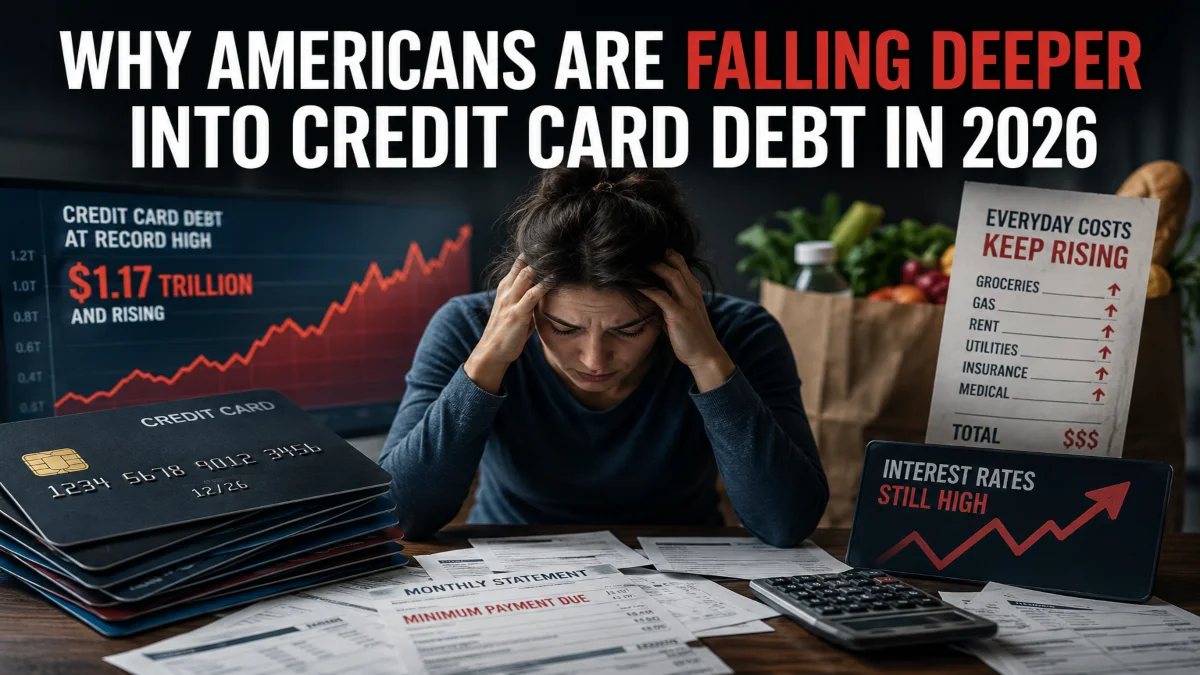
Credit card debt is becoming one of the biggest financial problems facing Americans in 2026. Millions of households are now relying on credit cards not for luxury spending, but for everyday essentials like groceries, gas, utility bills, and healthcare expenses. Rising living costs combined with high interest rates are pushing families deeper into financial stress, leaving many Americans trapped in a cycle of debt that feels impossible to escape.
Financial experts say the situation has become more dangerous because interest rates remain extremely high while wages struggle to keep pace with inflation. Even Americans with stable jobs are finding it difficult to pay down balances as monthly expenses continue climbing. For many households, credit cards have shifted from a convenience tool to a survival tool.
Everyday Expenses Are Driving Americans Into Debt
One of the biggest reasons credit card balances are rising in 2026 is the increasing cost of basic living. Americans are paying far more for necessities than they were just a few years ago.
Groceries remain expensive across much of the country. Housing costs continue stretching household budgets, while utility bills and transportation expenses keep rising. Many families are turning to credit cards simply to cover the gap between income and monthly expenses.
Middle-class households are feeling especially pressured because many are earning too much to qualify for financial assistance programs but not enough to comfortably handle rising costs.
Unexpected expenses are making the problem worse. Car repairs, medical emergencies, childcare costs, and home maintenance issues are forcing Americans to rely on credit more frequently. Without large emergency savings, many households have no other option.
This growing dependence on borrowed money is creating long-term financial instability for millions of people.
High Interest Rates Are Making Debt Harder to Escape
The biggest challenge for Americans carrying credit card balances in 2026 is the extremely high interest rates attached to those accounts.
Many credit cards now carry annual percentage rates above 20%, and some consumers with lower credit scores are paying even higher rates. This means people are paying massive amounts in interest charges every month, making it difficult to reduce their balances.
Even households making regular payments are seeing balances decline slowly because so much of their payment goes toward interest rather than principal.
For example, someone carrying several thousand dollars in credit card debt could spend years paying it off if only minimum payments are made. During that time, interest charges continue growing, trapping consumers in ongoing debt cycles.
Financial advisors warn that high interest debt is one of the fastest ways to damage long-term financial health because it reduces the ability to save, invest, or build wealth.
Millions of Americans Are Living Paycheck to Paycheck
A growing number of Americans are now living paycheck to paycheck regardless of income level. Rising costs and economic uncertainty are leaving little room for savings or financial flexibility.

Many workers receive their paycheck only to immediately spend it on:
- Rent or mortgage payments
- Groceries
- Insurance bills
- Transportation costs
- Debt payments
- Utility bills
Once these expenses are covered, little money remains for savings or emergencies. As a result, credit cards become the fallback option whenever unexpected costs appear.
This paycheck-to-paycheck lifestyle is creating enormous stress for households. Even small financial setbacks can quickly spiral into larger debt problems when consumers have limited cash reserves.
Financial experts say this trend is no longer limited to lower-income families. Increasingly, middle-income Americans are struggling with the same financial pressures.
Buy Now, Pay Later Services Are Adding More Pressure
Another major factor contributing to America’s debt problem is the growing popularity of Buy Now, Pay Later services. These payment options allow consumers to split purchases into smaller installments, often without fully understanding the long-term financial impact.
While these services may appear convenient, many consumers end up managing multiple payment plans simultaneously. Combined with credit card balances, this creates a confusing and overwhelming financial situation.
Consumers are increasingly using installment plans for:
- Electronics
- Clothing
- Furniture
- Travel
- Household items
- Online shopping purchases
Financial experts warn that Buy Now, Pay Later services can encourage overspending because purchases feel more affordable in the short term. However, missed payments, fees, and overlapping debt obligations can quickly create financial problems.
For younger consumers especially, these services are becoming a major contributor to growing debt levels.
Emergency Savings Are Shrinking Fast
One reason Americans are falling deeper into debt is the lack of emergency savings available to handle financial shocks.
Many households entered 2026 already financially stretched due to years of inflation and rising living costs. As savings accounts shrink, consumers are relying more heavily on borrowing during emergencies.
Medical expenses, car breakdowns, job interruptions, or sudden household repairs are now pushing many Americans directly into debt.

Financial experts recommend keeping several months of living expenses saved in emergency funds, but millions of Americans are far below that target. Some households have no emergency savings at all.
Without financial cushions, even relatively small emergencies can force consumers to depend on credit cards with high interest rates.
This creates a dangerous situation where debt continues growing while savings continue disappearing.
Younger Americans Are Facing Major Financial Pressure
Millennials and Gen Z workers are facing some of the toughest financial conditions in decades. Rising rent prices, student loan obligations, and slower wealth-building opportunities are making it harder for younger generations to achieve financial stability.
Many younger Americans are entering adulthood already carrying significant debt from education costs. At the same time, high housing costs are preventing many from purchasing homes or building equity.
As a result, younger consumers are relying more heavily on credit to maintain normal lifestyles.
Many younger adults are delaying major milestones because of financial stress, including:
- Marriage
- Homeownership
- Starting families
- Retirement investing
- Career changes
Despite being more financially aware than previous generations in some ways, younger Americans are still facing economic conditions that make saving and debt reduction extremely difficult.
Inflation Has Permanently Changed Spending Habits
The inflation crisis of recent years has changed how Americans spend money. Consumers are becoming more cautious, but many still struggle because everyday essentials remain expensive.
Households are cutting back on restaurant visits, vacations, entertainment, and luxury spending. However, reducing discretionary spending alone is often not enough to offset rising housing, insurance, and grocery costs.
Many Americans are also searching aggressively for discounts, coupons, and cheaper alternatives when shopping. Generic products and bulk purchases are becoming more common as families try to control spending.
At the same time, side hustles and second jobs are becoming increasingly popular. Americans are driving for delivery services, freelancing online, selling products, or working part-time jobs to earn extra income.
While additional income can help temporarily, many workers report feeling burned out from balancing multiple jobs alongside rising financial stress.
Credit Scores Are Becoming More Important Than Ever
As debt levels rise, credit scores are playing an increasingly important role in Americans’ financial lives.
Higher credit scores can help consumers qualify for lower interest rates on mortgages, car loans, and personal loans. However, rising credit card balances and missed payments are damaging the credit scores of many Americans.
Lower credit scores often lead to:
- Higher borrowing costs
- Reduced loan approval chances
- More expensive insurance premiums
- Financial stress during emergencies
Financial advisors say many consumers underestimate how quickly high debt utilization can negatively affect credit scores.
This creates another financial challenge because damaged credit makes future borrowing even more expensive.
Retirement Savings Are Being Sacrificed
Millions of Americans are reducing retirement contributions because they need immediate cash for current expenses and debt payments.
Workers who once contributed consistently to retirement accounts are now pausing or lowering contributions to handle rising living costs. This could create serious long-term financial problems in the future.
Older Americans nearing retirement are especially concerned about whether they have enough savings to stop working comfortably. Rising healthcare costs and economic uncertainty are forcing many people to delay retirement plans.
Some retirees are even returning to work part-time to help cover basic living expenses.
Financial experts warn that sacrificing retirement savings today may create even larger financial struggles later in life.
Financial Stress Is Hurting Mental Health
The emotional impact of debt is becoming a serious issue across America. Constant financial pressure is affecting mental health, relationships, and overall quality of life for millions of households.

Many Americans report feeling overwhelmed by debt, bills, and financial uncertainty. Anxiety about money has become one of the leading sources of stress for workers and families.
Financial stress often contributes to:
- Anxiety
- Depression
- Sleep problems
- Relationship conflicts
- Workplace burnout
Parents are especially worried about supporting children while managing rising expenses and debt obligations.
Experts say financial insecurity is creating long-term emotional pressure that extends far beyond bank accounts and credit scores.
Americans Are Searching for Financial Stability
Despite growing challenges, many Americans are actively trying to regain control of their finances in 2026.
Budgeting apps, financial education content, and debt repayment strategies are becoming increasingly popular. Consumers are focusing more on reducing unnecessary spending and building emergency savings whenever possible.
Financial experts recommend several important steps for households struggling with debt:
- Focus on paying down high-interest balances first
- Create realistic monthly budgets
- Avoid unnecessary financing offers
- Build small emergency savings consistently
- Reduce subscription expenses
- Limit impulse spending
Although these strategies can help, experts acknowledge that larger economic pressures continue making financial stability difficult for millions of Americans.
The Debt Crisis May Continue Beyond 2026
Economic analysts believe America’s debt problems may continue for years unless inflation slows further, wages improve significantly, and borrowing costs decrease.
Many households are working harder than ever but still struggling to achieve financial stability. Rising living costs and high-interest debt are reshaping how Americans spend, save, and plan for the future.
For millions of families, credit card debt is no longer just a temporary financial problem. It has become part of everyday survival in an increasingly expensive economy.
Unless broader economic conditions improve, many Americans may continue facing financial pressure, growing debt, and limited savings opportunities well beyond 2026.